

If you’ve ever wondered how do interior designers charge, you’re not alone. Pricing design services can feel mysterious, yet both designers and clients need to understand the models available.
Here’s a detailed, easy‑to‑follow guide to the most common structures used in the industry, along with real‑life examples to bring clarity.
1. Fixed Fee (Package Pricing)
One of the most straightforward models for how do interior designers charge is a fixed fee. In this approach, the designer sets a flat price for the entire project scope—this usually covers design only and excludes purchasing of fixtures, furniture, or accessories, which are billed separately.
How It Works
- The designer estimates total hours or complexity and calculates a flat rate.
- Alternatively, pricing might be based on cost per square metre or percentage of the overall budget.
- Critical to this model is including buffer hours and being crystal clear in the agreement on:
- What’s included in the price
- Number of revisions allowed
- Additional hourly charges if scope expands (e.g., “$150/hour for revisions beyond X rounds”)
- What’s included in the price
Pros and Cons
Pros:
- Clients can easily budget.
- Predictable income for the designer.
Cons:
- Risk of undercharging if the project takes longer than estimated.
- Hidden work might erode profit.
- Inexperienced designers may struggle to price accurately
2. Hourly Rate
Another common approach for how interior designers charge is the hourly rate model. Designers bill for every hour they spend: emails, meetings, sourcing, site visits, designing—you name it.
Keeks stands out by offering a free 15-minute session to understand the design process before you make a commitment!. Don’t let the golden opportunity go to waste and book your appointment today.
When It Suits Best
- Small, undefined, or evolving projects.
- Clients who might be indecisive or who want the flexibility to decide on the go.
- Unfamiliar project types where the scope is hard to predict.
Pros and Cons
Pros:
- The designer is compensated for all time spent.
- Less risk, since every task is billable.
Cons:
- Time tracking is tedious—client emails and quick calls add up.
- Clients may feel uncertain about final costs.
- Invoices may surprise clients with invisible hours.
3. Retainer Model
A retainer model blends stability with flexibility. Clients pay a flat monthly fee in advance—for a block of hours—often at a discounted rate (e.g., $1,000/month for 10 hours, equating to $100/hour when the standard rate is $120/hour).
Ideal For:
- Long‑term design support.
- Construction or renovation phases where on-demand availability is valuable.
Pros and Cons
Pros:
- Regular cash flow for the designer.
- Clients feel in control—they pre‑pay for access.
- Less administrative friction each month.
Cons:
- Designers may find it hard to slot tasks into a pinned schedule.
- Underuse of hours can create inefficiency.

4. Markups & Supplier Discounts
Many designers generate extra revenue by handling purchases and marking up items, or by accessing trade discounts and passing savings to the client.
How It’s Done:
- Designer secures a trade discount (e.g., 20%) and:
- Splits the discount with the client, keeping 10% as a fee, or
- Absorbs the discount as value-added and includes it in a higher design rate.
- Splits the discount with the client, keeping 10% as a fee, or
- Some designers pass the full discount to the client and explain they charge slightly higher design fees to reflect the service value—an approach that builds trust.
Transparency Is Key
It’s essential to state clearly in your agreement if you’re marking up products. Without clarity, clients may feel misled. Being open prevents ethical concerns and builds trust.
5. Combination Pricing Model — The Best of All Worlds
So, how do interior designers charge? Often, it’s a hybrid model tailored to phases and client needs. This multi‑method approach is what many successful designers, including the author of our summaries, used to build a six‑figure income.
Sample Hybrid Structure
- Initial Paid Consultation: Sets scope.
- Phase 1 – Concept Development
- Fixed fee for planning, mood boards, and concept.
- Hourly for meetings and site visits.
- Fixed fee for planning, mood boards, and concept.
- Phase 2 – Detailed Design Documentation
- Fixed fee for final selections and drawings.
- Hourly for contact hours.
- Fixed fee for final selections and drawings.
- Phase 3 – Construction Oversight
- Hourly or retainer for flexibility, depending on client preference.
- Hourly or retainer for flexibility, depending on client preference.
- Phase 4 – Styling & Furnishing
- Fixed fee for the design, and hourly for styling or shopping time.
- Fixed fee for the design, and hourly for styling or shopping time.
Why It Works
- Balances risk and clarity for both sides.
- Phased structure allows re‑evaluation after each stage.
- Clients see tangible deliverables and the value behind fees.
- Time‑intensive tasks like indecisive shopping don’t inflate the flat rate.
- Fee estimation is based on hours × hourly rate, adjusted for perceived value.
- Trade discounts offered, reflected transparently in proposals.
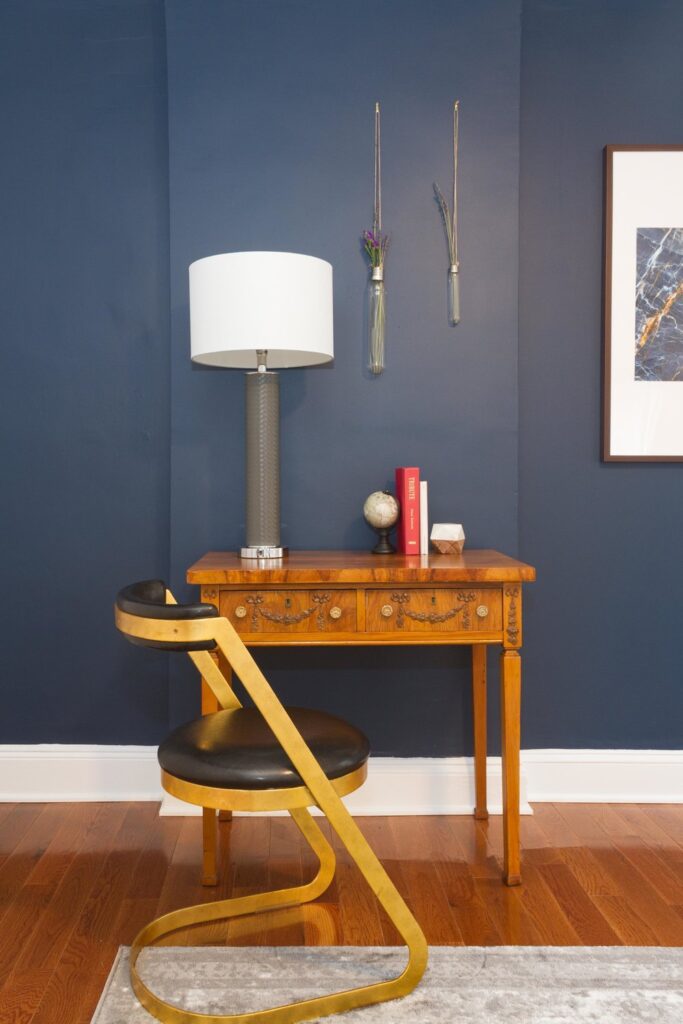
6. Real‑World Example: Keeks Interiors
To bring these structures to life, here’s how Keeks Interiors, a real e-design studio, prices its services. This shows how the way interior designers charge applies in practice:
- Mini Makeover (Online E‑Design) – starts at $399
Ideal for rooms that already have furniture and just need finishing touches. - Signature Design (Online E‑Design) – starts at $599
Best for rooms needing new furniture, layout refresh, or additional guidance. - In‑Person Design – starts at $849
For those wanting a hands‑on experience near NYC. - Consultations:
- Free 15‑minute discovery call
- 30‑min virtual consult – $40
- 1‑hour design meeting – $80
- Free 15‑minute discovery call
What Model Is This?
This is a fixed‑fee/package structure with clear tiers and add‑on consultations. It’s especially transparent and easy for clients to understand costs upfront—making it a powerful application of how do interior designers charge.
7. Choosing the Right Model for You
Here’s a quick guide to help designers decide which structure fits their business and clients:
Situation | Recommended Model |
Clear scope, desire for simplicity | Fixed Fee |
Undefined scope, complex projects | Hourly Rate |
Long-term support needed | Retainer Model |
Extra income from product sourcing | Markups / Trade Discounts (be transparent) |
Balanced control, phased work | Combination Model |
8. Tips for Clarity, Confidence, and Client Trust
- Always document the scope. What’s included, what’s not.
- Set revision limits. Define what’s covered—and hourly extras for more.
- Include buffer time in fixed‑fee models to protect your profit.
- Track time carefully if charging hourly—every quick email counts.
- Be transparent about supplier markups or discounts. Clients feel respected when they know the full picture.
- Break large projects into phases. Each phase is a checkpoint for scope, pricing, and comfort.
- Use initial consultations to define the scope and recommend the best fee model.
Final Thoughts: How Do Interior Designers Charge?
There’s no single answer to how do interior designers charge—the choice depends on project complexity, client needs, and your business style. From fixed fees and hourly rates to retainers, markup models, and hybrid approaches, every method has its place.
Using real packages, such as those from Keeks, demonstrates how fixed-fee models provide clarity and accessibility for clients, especially in online design. Meanwhile, hybrid and phase‑based structures offer flexibility, risk management, and profitability for designers.
Ultimately, choose a structure that aligns with your values, reflects your worth, keeps you profitable, and builds client trust. When done right, pricing is a powerful tool for confidence—for both you and your client.